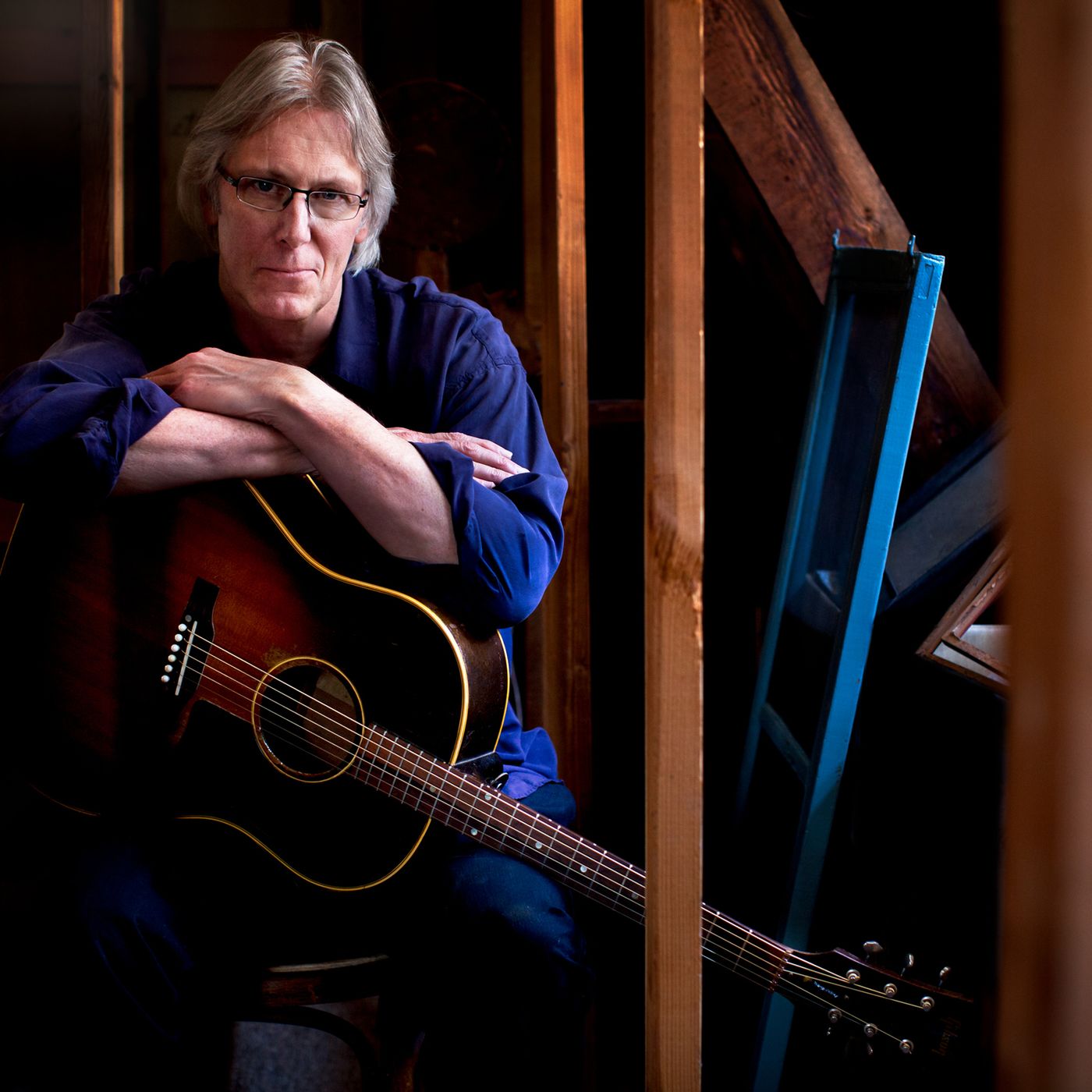
Jon Pousette-Dart | Matt Connarton Unleashed
What's This About?
Listen, watch, and explore more episodes at MattConnartonUnleashed.com
Want to be a guest on the show? Visit MattConnartonUnleashed.com and choose Be A Guest.
Follow the show, subscribe on your favorite podcast platform, and join us live for Matt Connarton Unleashed.
Talk. Music. Entertainment. Interviews. And More.
Speaker 1: Better every day. That sounds good to me. And we've got John Possett Dart with us via phone.
Speaker 2: Hello John, Hey matt II.
Speaker 1: You doing good, good, welcome back to the show, and thank you for being flexible. We were going to do this via WhatsApp, but I'm having all kinds of WhatsApp issues today, so we're doing it old school on the phone. But you are going to be returning to Manchester, New Hampshire very shortly. Let's see June fifth at the Rex Theater. So it's wonderful to gives us an excuse to talk because I looked it up. The last time you were on the show with us it was all the way back in September of twenty four, so it's wonderful to speak with you again.
Speaker 1: It's been a while.
Speaker 2: Yeah, well it's good. Thank you for having me. Let's just good and we're looking forward to coming back to Rex, which is a really nice room.
Speaker 1: It is, Yeah, it's a very nice place. If anyone hasn't been there, I suggest that they check it out and this will be a perfect opportunity to do so on June fifth at seven thirty pm. And it is, of course, it is the John Pussett Dart duo. Now is it the same duo? Are you performing with the same gentleman that you've been performing with for the last I don't know how many years now, right, Jim.
Speaker 2: It's been it's been quite a while. Yeah, Jim and I have been playing together for oh god, we've been playing it over twenty twenty five years now. It seems like, you know, we we he played in the band when we were the last you know, the band we had, which was quartet, and we've really kind of stripped down to a duo just because people really seem to respond to that setting, because it's just really intimate and organic and the song's really come through. So it's really enjoyable to kind of work, you know, in the in the duo setting, and we did.
Speaker 2: It's a really nice kind of intimate exchange, you know.
Speaker 1: Jim Chapdlaine. Am I saying his name correctly?
Speaker 2: Yeah? Jim Chaplaine. Yeah, we've been working together for many years now.
Speaker 1: Okay, okay, now do you do you do the entire set with the two of you? Are are there? Is there anything that you do just by yourself or is it are all the songs sposed?
Speaker 2: We we do. We do the whole set together, you know, and we ranged this. What we do is I really kind of go through extensively all all the all the albums, the Capitol records. We kind of cover all the most known tracks that people no probably know the best, and and then also go through subsequent solo records and many individual singles that have been really since. So it covers a wide sot and a few kind of obscure covers. So really covers a wide swath of material. And uh, and Jim and I have been playing for so long together that there's just it's a really nice chemistry and we kind of have a good idea of what each other are is going to do, you know, very well.
Speaker 2: We're pretty pretty well attuned to each other where he's like a musical brother to me. So it's it's it's a it's a nice fit.
Speaker 1: Oh that's excellent. When you find somebody to play with who you have that with, you know, it almost becomes like, uh, you know, almost becomes like telepathy, right like intuitive it is.
Speaker 2: And also we share we've we've known a lot of work with a lot of the same people. You know, he worked with Al Anderson from n RBQ is like one of the great guitar players American guitar players, and we we toured for years within RBQ, and he knows worked with a lot of friends in Nashville that I've worked with through the years, and we all of our you know, original records there, and I was I was back in Nashville for many years living down there and writing and working, so we have a lot of mutual friends there as well.
Speaker 1: Now, it seems like you've been continuing to release new singles right and and video content, which is wonderful. Do you Is that kind of how you you see yourself continuing and definitely into the future, because obviously, you know, there are some artists who still insist on putting out full albums and even releasing vinyl, But but you seem to have settled into a nice groove doing it the way that you've been doing it, and the songs are great. You know, I love that song better every day. We'll play the entire song at the end of our our conversation today, and we did play right before I called you, we played can We Just Talk, which is also a wonderful song.
Speaker 1: But obviously, the the way that you release music has changed certainly from when you started.
Speaker 2: Yeah, well, you know what I've been following kind of pretty much what's what's been going on as the mediums have changed. You know, when we when I first started out, you know, we were it was I was Wisconsin album radio was full out that we were releasing, and that was what would get reviewed, not even singles, but full albums, and that was what radio was was centered around. And as time has evolved, when's gone from the vinyl to the you know, to CD to cassette, and it's moved through all its mediums and through the way music is received through the portals.
Speaker 2: Now with streaming, it's the attention spans have kind of shrunk down to you know, five or ten seconds or less, you know, to get an attention span of people that turned into things. So it's it's become you know, because of streaming. I've found that I'm I put the last record I put out and you know a couple of records you just mentioned talk the last record I put out, I put a huge amount of effort into and and we I got together with Bill Warndick and put together the cream of the crop of the muscle shows and Memphis rhythm section for that down in Nashville at Ronnie Millsap's place.
Speaker 2: We worked really hard on that record, and I thought it was the best record I ever made, and it was almost invisible in terms of the delivery system the way things are now, because it just kind of went by and people didn't even know it was there. And what you know, you put a lot of work into an album and people catch maybe one cutter maybe too and they never get never really received the whole record. So I really address kind of the way things are kind of coming down through the portals of people are really listening to things.
Speaker 2: And so I've been focusing, like going back to the days of singles and putting out singles with videos regularly, so I don't wait, I don't I put them out so there's a constant stream of things coming rather than like waiting for a long time, putting out a release, seeing a few cuts get through, and then going back and putting a whole lot more work into another album. Right, So it's just a different way of kind of addressing it. It's I've just kind of been following what seems to be happening, and you know, these days there's not even CD players in cars.
Speaker 2: Right, It's come down to streaming and people are really hearing things via streaming. So that's it seems that that's kind of what is the medium at the moment.
Speaker 1: Absolutely, there's also you know, for an artist who has the material that you have, you know, spanning multiple decades, there's that that thing of I've heard Paul Stanley of Kiss has described it this way. When you've been around a long time, at a certain point, you're sort of competing against what you've already done. Because people who've been bands, who've been with you for a long time, they have certain memories attached and therefore emotional connections to to your earlier music. So then you're sort of you're sort of competing against that.
Speaker 1: But but obviously for you, it's really important to continue to create and evolve and put out new music. I mean, I assuming, I mean, it sounds like it's very important to you to do that.
Speaker 2: Well, I think it's just you know, I think, as I think all musicians and all artists you know, in general, I think are really involved in what they're currently doing, and you know, and are kind of moving ahead constantly, So you're you're kind of pretty much always ahead of wherever you know, whatever's out there is there, so you're kind of like moving ahead of you know, you're you're trying to keep you know, a pace of going what you're creatively up to. So so you know, I I just I feel like, you know, you I guess you could you know, just sit back and just you know, stay with the things you're doing, but you know, the the things you've done before.
Speaker 2: But I find, you know, I find most most people want to keep pushing ahead creatively and keep where you know, looking forward and moving forward. And so that's that's pretty much where I am. And you know, music has always been It's really been my first love. You know, it's been something I was connected to ever since I was a child, and so it's something that I you know, I constantly feel a need to to to try and find things, the things that are you know, to express about what's happening. And I'm always trying to kind of trying to find the silver lining on whatever's going on.
Speaker 2: So that's that's a constant right now.
Speaker 1: With the studio work that you do. Does Jim also play on those tracks or is that strictly.
Speaker 2: At its Yeah, it's it's quite a mixture. In other words, we've done we've done a few. The record you just played, we did there's on that. There's a mixture of cuts that there's things we did together on that record and the record the song you just Played Better every Day that was done with I wrote that with Gary Nicholson, who's an amazing writer in Nashville and he's from Texas. And on that track, I had Reese Whining from from Stevie Ray's Van Double Troubles on keyboards and there was that was a really nice section of guys and Pete Pat mcgoffin on guitar.
Speaker 2: So there's a here's a mixture of things, you know, it moves around sometimes. Some of the cuts came from things that I songs that I co wrote Nashville and recording Nashville and other things we did up here at Jim's Play. So it's a that that record, any Gravity, was a mixture of things. Talk the most recent record that you played, Can We Just Talk was was done at Ronnie Millsap's place with Bill Warndick has since passes what it was a brilliant engineer, producer, and we did that with just I just had like my dream, a dream team on that Reggie Young, who is my favorite guitar player, Bernonah who since passed, and I got Dan Dugmore and and David Hungate and Glenn Morrowing.
Speaker 2: I mean it was like the dream section of players. And I had to do duets with Becca Bramlett Bonding, Delaney's daughter, and Ronda Vincent and Joe l Mauser. So I had a really great you know, that was a really great record for me. I mean a record I really enjoyed making. And then since then, like I said, like you mentioned, I started moving over to singles and doing right now there's another I've just finished another song which we're doing actually a full, full, really film video with an Argentine director that will work on now on a song.
Speaker 2: I just finished that. So there's another film coming forth on a song I just completed. It was really written for this film that I had in mind.
Speaker 1: Oh wow, Oh that's amazing, that's exciting. That's very cool, very cool.
Speaker 2: Yeah.
Speaker 1: Can I can I ask you two about this? So the song put Your Gun Down that was originally called Ready to Fly? Is that correct?
Speaker 2: No, that it's just the record. No, it was. There was a release put Down Your Gun. It was always titled put Down Your Gun. It got re released because I wrote it was and it was I was released on a on a compilation for the Anti Handgun Coalition way back okay, and then uh and and and then it was re released on I was put Down Your Gun on the on the album, which was the last record that the original band re recorded in actually record that Marvelhead, Massachusetts and with the original band, and that track was uh, put down your Gun was was was originally written to support the anti handgun Coalition and I was going to do another version of it.
Speaker 2: But boy, there's a real division in the country about that issue. You know, there's there's there's there's things you have to take into consideration these days with what's going on in the country.
Speaker 1: Okay, Yeah, No, I was curious because I that was something that I didn't I didn't realize when we had talked the first time and I happen to see that, I was like, oh, that's very interesting because I didn't know about that. And you do always get into I mean, it is it is divisive, and you know a lot of people think that and this is not my personal view, but a lot of people think that you shouldn't, you know, if you're a musician or if you're some sort of entertainer, some people don't want you to take a stance on anything.
Speaker 1: It's like they think it's disappointing or it's frustrating to them. But I always say, well, regardless of who you are, whether you're a public person or a private person, whether you're famous or not famous, you have a right to your opinions, and you have a right to express them. And you know, even if I don't, even if I don't agree with somebody, I you know, I encourage, uh. I mean, I'm always open to hearing. In fact, if anything, I'm always kind of curious what people think. That's part of why I do this sport.
Speaker 2: I support that one hundred percent. You know, I really believe all artists should do whatever they feel the importance to doing. I think speaking of politically is absolutely the the the something at all artists should be. Should be folks should, you know, deal within and within our own constitute what they feel and express it exactly as they see fit, right, And I think it's really important for artists to do that. And I think that's what art is about. And I think that people don't want that to be mixed into music, are just kind of obscuring a very important missing a point, or just wanting pure entertainment for your pure entertainment value, which to me is worth nothing.
Speaker 2: You know, you have to have part and soul and and and be saying the things that are important to you as an artist through every medium that you deal with, whether it's music, film, or books or anything anything with intellectual copyright. So yes, I can I completely concur that, you know, I mean, protest songs, anything that's all important, all important parts of of of of you know, of being expressing the integral things that need to be spoken about. And you know, some music is entertaining and some music has has has points to be made.
Speaker 2: They're all it's all part of an important message, and it's all part of music and.
Speaker 1: Art, right absolutely, And you as a listener you're free to accept or reject whatever whatever you want. You know the message and you know, and and art is subjective anyway, so it doesn't it doesn't necessarily even have to mean to you as a listener what it meant to the artist. But but yeah, it's funny too when people get when people get up tight about it too. It's like, well, you know, like rock and roll is supposed to be rebellious, and yet some people think that rock and roll should be about falling in line, and uh, you know, it's it's strange.
Speaker 2: Yeah, yeah, I Agreeamply. I mean, you know, we're going through a very difficult time where we're you know, I mean, there's there's so many issues that are problematic right now with going on trying to decide what people should or shouldn't get, or you know, trying to censor with what is what is funny or not funny, or what's what you know, what is appropriate or not appropriate, And it's it's it's you know, it's it's a very you know, we're we're in we're kind of in a dark place at the moment with that.
Speaker 2: And I think that, you know, the kind of people need to really stand up for what they believe in and and and freedom of speech and the and the great thing about this country is people can say what they want to say, and they have the freedom to say it. There's nothing should be countering that. And so I'm a firm believer that all people have the right to to to to express themselves, how they see fit and live their lives how they see fit.
Speaker 1: And by the way, I'm curious about this current tour, So are you are you going all over the US on this track or where do you go after you hit Manchester in June? Where do you go next?
Speaker 2: We've been mostly leaning on the Northeast because largely just because there's you know, there's a steady, steady following here. And I used to tour the whole country extensively, but in the times it's it's become in order to keep up, like a whole route to the country, you really have to keep up in cessant touring. And I slowed down a bit, and so some of it, some of the there's areas where I can go. But when you go out and you're trying to do isolated dates, let's say in the southwest or the northwest, or you know, when you get out there and you and you get on a plane, you're taking your guitars out and you're traveling long distances, it's really hard to make the whole picture the ends meet.
Speaker 2: Economically, you know, it becomes almost an economic equation to try and make all of it at work. So the Northeast has become a really kind of practical place for me to be touring right now the most for the most part, and we do, I do jump out to other areas sporadically, but most of these most of these things are scattered through UH that we're turning now, or through UH Connecticut and New Hampshire, Massachusetts, New York, Vermont, Maine, you know, and in in this in this part of the country, and there's you know, we I get offers that commanded from various places, and I would like to be doing some things and in places that I used to do a lot of work in Colorado and California and parts of the south UH and the Southwest, but it becomes harder and harder to do that.
Speaker 2: And I can't tell you how difficult it is these days. I play. I travel two guitars, and and Jim travels with two guitars. And when you try and get your gear through an airbor and get your guitars on planes these days and get everything there in one piece with your equipment, it's no easy task. You know, It's like it requires a little.
Speaker 1: Bit of work, right absolutely, absolutely, Yeah, you know, gas is pretty expensive too, and that's another that's another issue. And yeah, touring has become a lot of a lot of artists have complained that touring over the past few years, even before you know this current spike and gas prices, of course, it's become really cost prohibitive. It's very, very difficult now.
Speaker 2: Yeah, and also, you know the kind of the catch twenty two of that is it, you know, a lot of artists coming up, the younger artists think, you know that that kind of by uh kind of planting their their persona on the Internet and trying to establish themselves to that that medium, the dat alone is going to kind of give them, you know, put them on the map. And it's just it's it's just not so you know and other and in order to really you know, earn a a following, it has a roots. You know, you really kind of have to go out and hit the road in earnest and very you know, like for and for protracted periods of time to really gain a market share.
Speaker 2: And that's kind of what it's. You know, I think that's never that's never ever stopped being true. And I think that's the you know, the real you know, the real barometer of really kind of getting through is by really being committed to the road. Yeah, and it's a harder and harder thing to do, like you mentioned, you.
Speaker 1: Know, it absolutely is absolutely one. Well again, I just want to remind people and if you're just joining us, of course we have John Posse at Dart with us because the John Pousse at Dart Duo is going to be at the Rex Theater on June fifth at seven point thirty. And there's no opener for this, correct John, it's just you guys.
Speaker 2: I don't think so if I remember correctly, last time we did not have an opener, so I think it'll just be usked. I think that's correct.
Speaker 1: How long do you play for? Is it a couple of hours or yeah?
Speaker 2: Yeah, yeah, like you know, usually we do ninety or you know, or you know, or longer so you know, like or an hour YouTube, couple hours you know it really it's it moves, it bends and flows, you know. It depends on what people, you know, It really depends on the room and what's going on. But yeah, something you know. So usually we do one long set that goes on for goes on for a bit of time. Yeah.
Speaker 1: Oh that's great. That can be an advantage with not having an opener too, It kind of it tends to give you more time and flexibility with that. So that, Oh that's really good. So yeah, I encourage people they can go to uh well, actually if you go to the Rex. Oh sorry, go ahead, John, No.
Speaker 2: The Rex. Yeah, the Rex, which is a really nice room. It's the people run it, or it's it's a really good crew.
Speaker 1: Yeah. Absolutely. And of course all your tour dates are up at whoset dash dart dot com, so I encourage people to check that out too, because obviously, yeah, June fit well, actually it's not that far away a couple of weeks, but no.
Speaker 2: That's coming at that. We're playing tonight at Arlow Guthrie's place in the Gutry Center and Great Barrington, mass.
Speaker 1: Oh no kidding, we're.
Speaker 2: Jumping something all over the place. Yeah. We used to do a lot of work with Arlow and I love Arlow. Oh wow, we'll be there tonight. But he has a wonderful church called the Dustry Center. Okay, we're playing there tonight.
Speaker 1: Oh very cool. I'm glad you mentioned that. Excellent, excellent, So that's tonight in Great Barrington? Is that what it's called great Barrington.
Speaker 2: Yeah, we're doing that tonight yet.
Speaker 1: Very good, very good, excellent. Well, John, I appreciate you being here with us again. We'll have to make sure we don't like quite so much time go by before we talk to you next, because you're always creating and releasing new music. So even if you don't have a show in the area, you know, whenever you have a new single or anything, that's a great excuse to have you on because we always really enjoy talking with you. But I'm glad you're able to be here with us today and again. I will remind people June fifth at the Rex Theater at seven thirty the John Whost Dart Duo, and at the conclusion of our conversation, I am going to play I'll play it all the way through this time better every day.
Speaker 1: But I really love this song. Can you before we do that, before we let you go, can you tell me anything about the inspiration for this song? Because I like this a lot.
Speaker 2: Uh. I you know, I'm glad you like that because I do too, you know, I was I wrote that with Gary Nicholson and Gary Nicholson people need to like, really explore more of him. He's he's just a treasurer and he's from Texas, and he's written so many great hits for Bonnie Raid, Vince Gil, Patty Loveless, uh uh b D King Doctor John. I mean, he's he's had just this. He's just an amazing uh laundry list of absolutely incredible songs he's written. And he's just a wonderful musician. And I loved writing with Gary, and we and when we after we wrote the song with him, he agreed that we produced it at his place, and so I did it his studio in Nashville.
Speaker 2: And as I mentioned, Rhys Winans, who is from Stevie Raisman Double Trouble is just an amazing keyboard player, and Tom Hambridge, who he's been doing Buddy Guy. He produced all the Buddy Guy's stuff now and is on drums. And Pat McLoughlin is an amazing guitar player. And joe elm Mosser, who's just astoundingly great singer from that she's one of my favorite singers. So it was like a really great section and Gary was part of that. And so you know, I urge anybody to look up Gary Nicholson because boy, he's got he's just got a just so much good music.
Speaker 2: He's he's been behind from years and years and years and years, so he's he's a real treasure.
Speaker 1: Okay, Okay, yeah, I mean it shows in the results. This is a just a wonderful song. So we will we'll let you go, my friend, John Poussett Dart again June fifth at the Rex Theater, the John Poussett Dart Duo. Hopefully we'll talk to you again soon and and again thank you for joining us today. This has been wonderful as always, Matt, it's.
Speaker 2: Always great to talk to him. Thank you for having me. I really appreciate it.
Speaker 1: You got it anytime, all right, Thanks John, take.
Speaker 2: Care, Okay, have a good weekend you too, all right.
Speaker 1: That is the great John Poussett Dart. And here it is. This is called Better every Day.
Sponsors & Advertisers Heard During Matt Connarton Unleashed


 Apple Podcasts
 Castbox
 Castro
 Goodpods
 Moon FM
 Overcast
 Pocket Casts
 Podbean
 Podcast Addict
 Podcast Republic
 Spotify